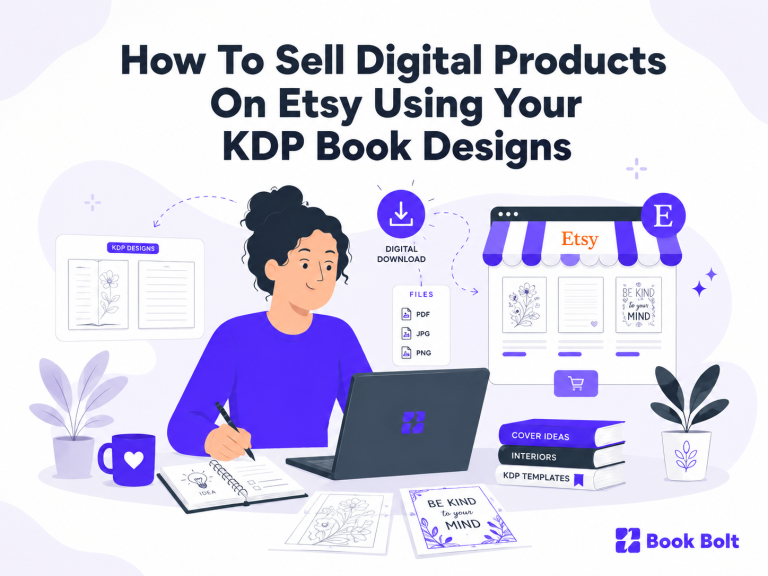
If you already use Book Bolt to create books, interiors, covers, puzzles, activity pages, or coloring pages, you may be sitting on a much larger product opportunity than you realize.
Most Book Bolt users think about Amazon KDP first, and that makes sense. Amazon gives publishers access to a massive marketplace without requiring them to manufacture books, hold inventory, or ship individual orders. But Amazon doesn’t have to be the only marketplace for your creativity.
Many of the skills and assets you’ve developed while building products with Book Bolt can be adapted into products for another enormous marketplace: Etsy.
The mindset shift: instead of thinking of yourself exclusively as a book publisher, start thinking like a digital product creator.
A design that becomes part of a book on Amazon could become a printable on Etsy. A planner interior could inspire downloadable planner pages. A coloring book could become individual printable coloring packs. A puzzle book could become downloadable activity bundles. A journal concept could become printable journal pages.
The possibilities expand considerably once you stop thinking exclusively in terms of books.
There is one major difference, however. Creating the product is only half the equation. You also need to understand what Etsy shoppers are searching for, how competitive those searches are, what successful Etsy sellers are doing, and how to structure your listings so customers can actually find them.
That’s exactly why we want to introduce Book Bolt users to Sale Samurai.
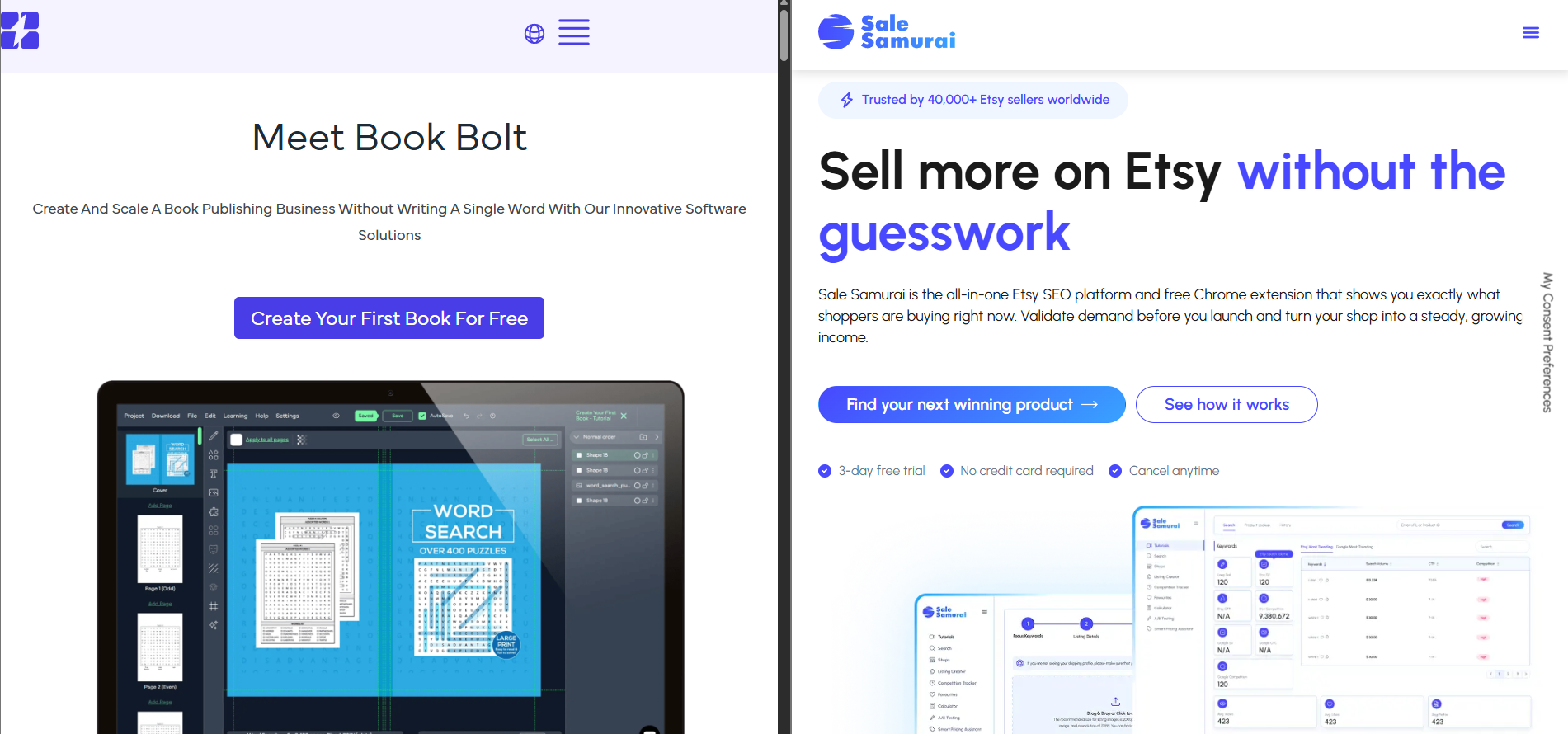
Book Bolt helps you create. Sale Samurai helps you research and compete on Etsy. Together, they form a powerful workflow for creators looking to expand beyond Amazon.
Why Book Bolt Creators Should Consider Etsy
If you’ve spent months or years creating books for Amazon, starting another online business might sound like starting over. It doesn’t have to be. You already possess one of the most important parts of the equation: the ability to create products.
You’ve probably already learned how to:
- Research niches and develop product concepts
- Create covers and design interiors
- Build activity pages and coloring content
- Experiment with typography and develop themes
- Create products for specific audiences
- Identify seasonal opportunities
Those skills don’t disappear when you leave Amazon. They become transferable. Etsy simply gives you another marketplace where you can put them to work.
In some cases, you don’t even need to create an entirely new product. You can take the underlying concept or design direction you’ve already developed and adapt it into something appropriate for Etsy.
The key word is adapt. We’re not suggesting you upload your entire KDP catalog to Etsy. Amazon shoppers and Etsy shoppers behave differently, the products are different, the search environment is different, and the buying intent can be different. The opportunity is to take what you’ve learned through Book Bolt and use it as the foundation for an Etsy product business.
From Book Publisher to Multi-Marketplace Creator
Imagine you’ve created a children’s dinosaur coloring book using Book Bolt. Traditionally, your workflow might look like this:
Research → Create → Publish on Amazon → Promote → Repeat
But what if the same creative process could support multiple products? Your dinosaur theme could inspire:
- Printable dinosaur coloring pages
- Dinosaur activity sheets
- Printable dinosaur mazes
- Dinosaur birthday activities
- Dinosaur classroom worksheets
- Dinosaur puzzle packs
- Downloadable children’s activity bundles
Instead of thinking “I created a dinosaur coloring book,” start thinking:
“I created a collection of dinosaur-themed creative assets. How many useful products can I build around them?”
That’s a fundamentally different mindset, and it can dramatically increase the potential value of the work you’re already doing.
The Two-Part Workflow: Book Bolt + Sale Samurai
| Book Bolt | Sale Samurai | |
|---|---|---|
| Role | Product creation | Etsy intelligence |
| What it handles | Researching ideas and creating the underlying content, interiors, and designs | Keyword research, search-volume analysis, competition research, listing creation, shop analysis, competitor tracking |
| Question it answers | “How do I build this?” | “Should I build this, and for whom?” |
The objective isn’t simply to create more products. It’s to create products with evidence that shoppers are looking for them.
That’s an important distinction. One of the biggest mistakes creators make is:
Create first. Research later.
A stronger workflow is:
Research → Validate → Create → Optimize → Publish → Analyze → Improve
Let’s walk through what that looks like, step by step.
The 13-Step Book Bolt to Etsy Process
Step 1: Start With the Assets You’ve Already Created
Before creating anything new, look through the products and concepts you’ve already developed with Book Bolt and build a simple inventory. Maybe you’ve produced coloring books, planners, journals, puzzle books, activity books, educational worksheets, trackers, log books, notebook designs, or themed illustrations.
Now ask yourself: could any component of this product become useful as a standalone digital product?
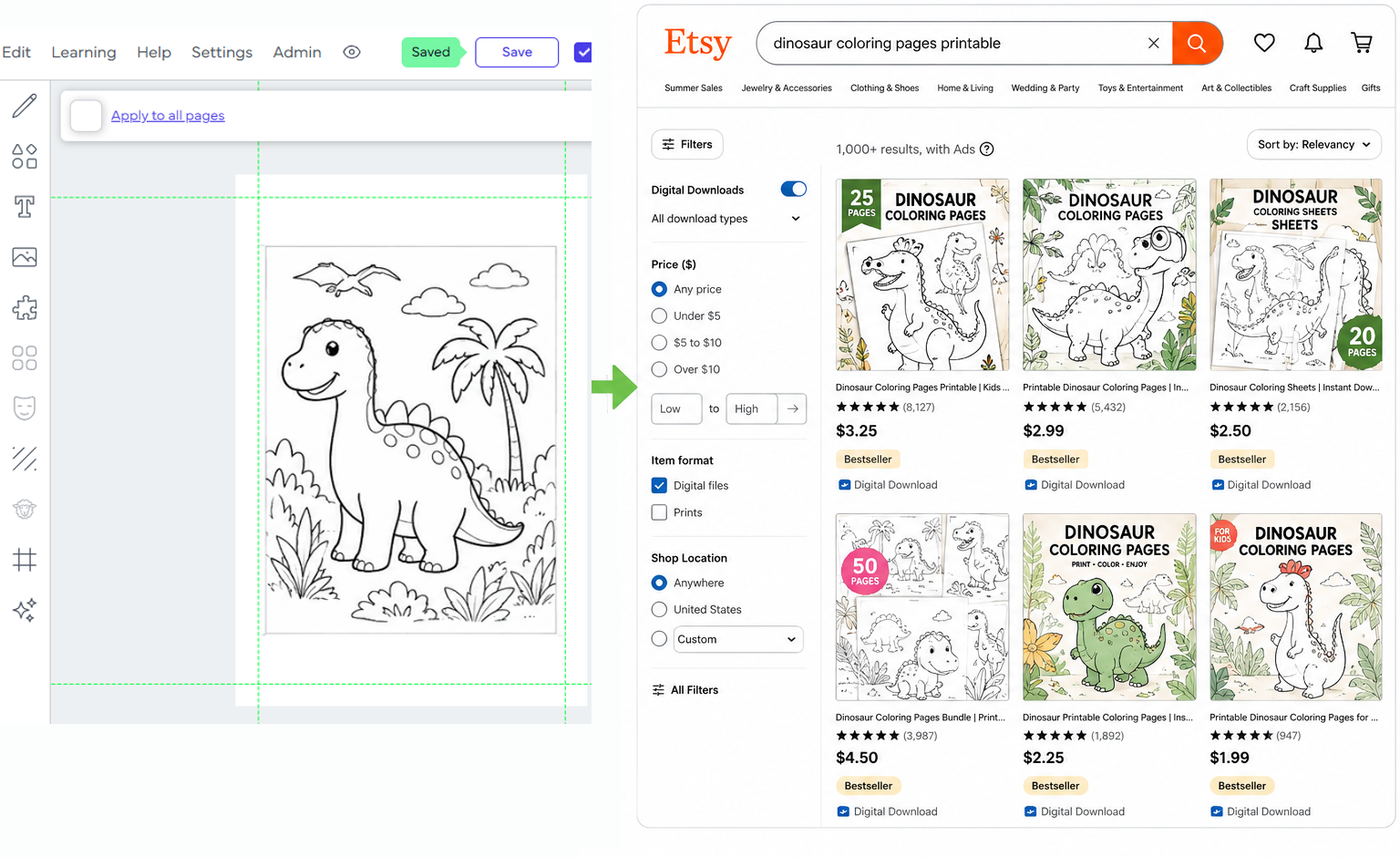
Coloring books. A 50-page coloring book could inspire 50 Printable Animal Coloring Pages, or smaller themed bundles such as 10 Printable Farm Animal Coloring Pages for Kids.
Planners. A complete planner could inspire separate products: weekly planner printable, monthly planner printable, meal planner, habit tracker, goal planner, reading tracker, fitness tracker, budget planner. You could also package several related pages together.
Puzzle and activity books. Individual activity concepts could become printable mazes, word search bundles, classroom activities, travel activities, rainy-day activity packs, or holiday activity packs.
Journals. Instead of selling only the physical journal concept, you might develop printable journal pages, gratitude prompts, reflection worksheets, reading journals, or goal-setting worksheets.
One creative concept can branch into many different products. But don’t start creating all of them yet. First, you need data.
Step 2: Validate the Idea With Sale Samurai
Suppose you’ve created a Book Bolt product around meal planning. You might assume that “meal planner printable” is a good Etsy keyword. But assumptions aren’t a business strategy.
You want to investigate questions such as:
- Are people searching for it?
- How competitive is it?
- Are there more specific searches?
- What related products are shoppers looking for?
- What terminology are customers actually using?
Sale Samurai’s keyword research tools are designed to help answer those questions. Instead of relying on intuition, you can investigate Etsy search behavior and compare search demand with competition.
For example, you may begin with meal planner and discover related opportunities around phrases such as weekly meal planner, printable meal planner, meal planner PDF, family meal planner, grocery planner, or meal prep planner.
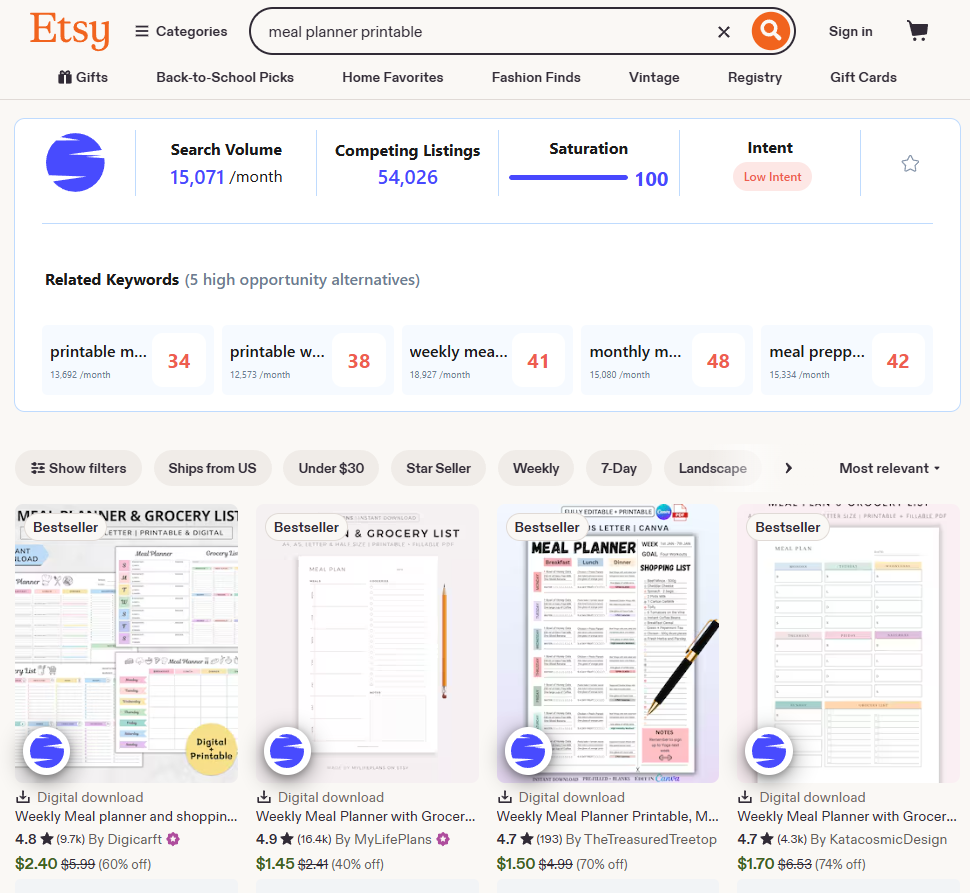
The exact opportunity will vary over time, which is precisely why research matters. Your goal isn’t necessarily to find the keyword with the largest search volume. Often, a more specific keyword with meaningful demand and manageable competition is far more interesting.
Run your first keyword search today. Open Sale Samurai and type in the niche you already publish in. Code ETSY50 takes 50% off your first month.
Step 3: Look for Long-Tail Opportunities
Broad keywords can be extremely competitive. Imagine trying to rank for planner. You’re competing against an enormous range of products.
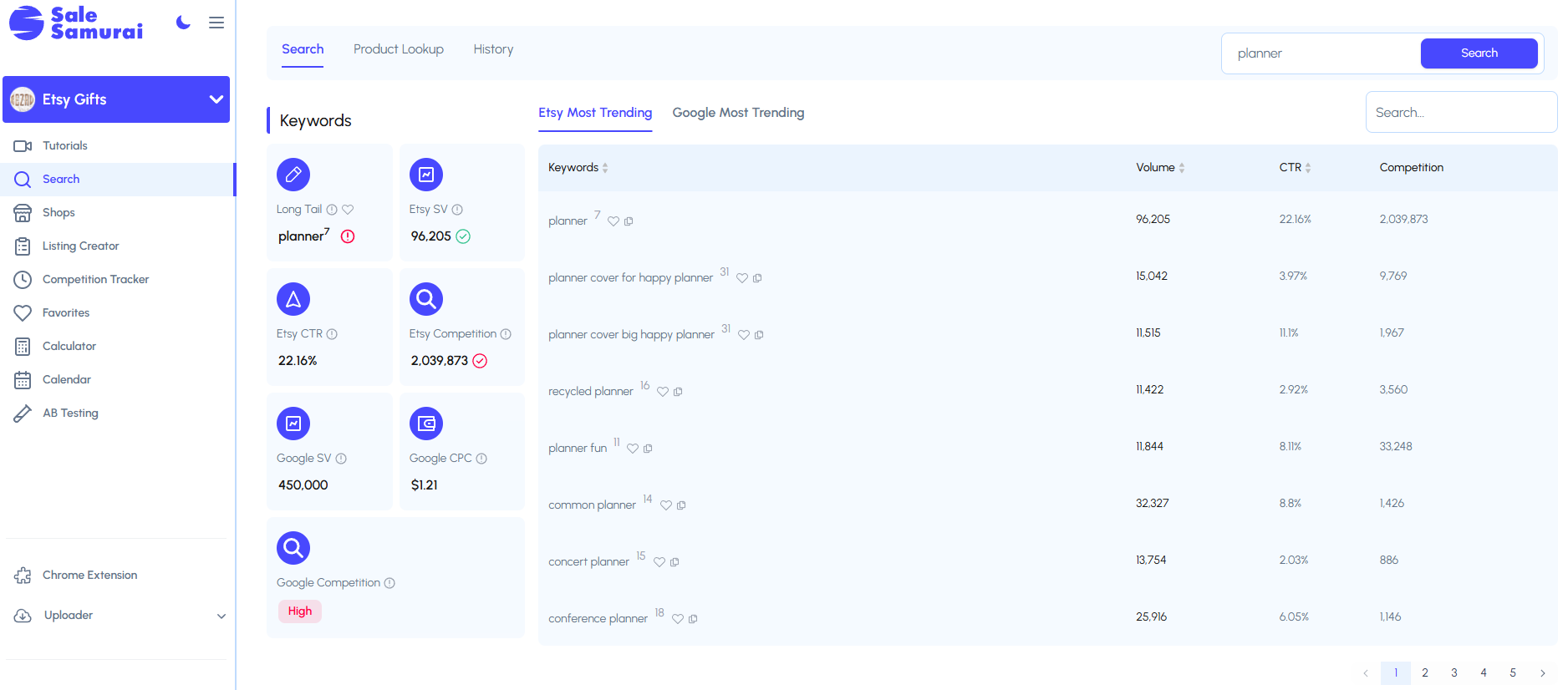
But shoppers frequently search much more specifically:
- printable teacher planner
- weekly meal planner printable
- kids travel activity printable
These are long-tail searches. The search volume may be smaller than a generic term, but the shopper’s intention is much clearer. Sale Samurai’s keyword research functionality lets sellers investigate related terms, search volume, and competition so they can identify these opportunities.
Think about it this way. You don’t need to compete for the biggest keyword. You need to find enough relevant buyer searches where your product has a realistic opportunity to appear.
Step 4: Research the Competition Before You Create
Keyword research tells you what people are searching for. Competitor research tells you what they’re buying.
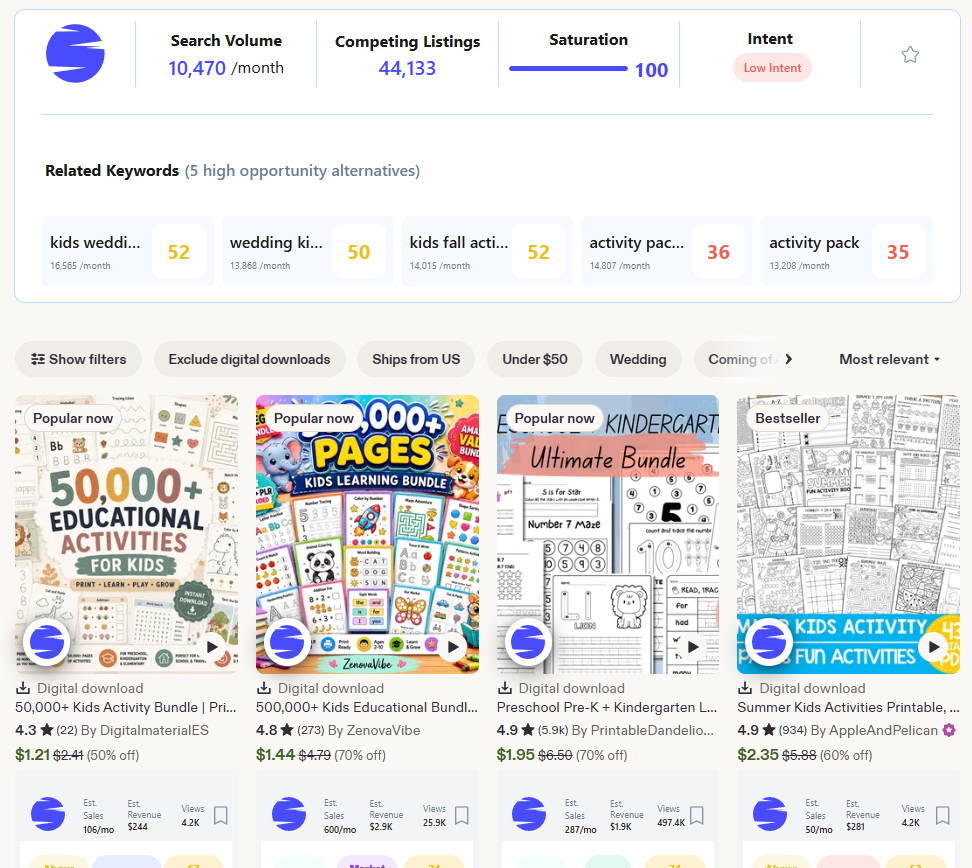
Before spending hours developing your Etsy product, examine the marketplace. Search for the products you’re considering, then use Sale Samurai to investigate competing listings and shops. Look for patterns:
- What kinds of products appear repeatedly?
- What price points are common?
- How are successful listings presented?
- What themes seem popular?
- How many products do successful shops carry?
- What keywords and tags appear around relevant listings?
Sale Samurai’s Competition Tracker can also be used to follow Etsy shops and analyze their listings, pricing, tags, and estimated performance.
The objective isn’t to copy another seller. It’s to understand the market. There’s a major difference. Competitors are giving you information about what customers respond to. Your job is to use that information to develop your own differentiated product.
Step 5: Go Back to Book Bolt and Create for the Opportunity
Notice what we did differently. We didn’t begin by creating something randomly. We started with an idea, investigated Etsy demand, and examined competition. Only now do we create the final product. This can save an enormous amount of wasted effort.
Suppose your original idea was Printable Kids Activity Pack. After researching with Sale Samurai, you discover a more specific opportunity around a particular age group, theme, event, season, or activity type. Now your Book Bolt creation process becomes much more focused.
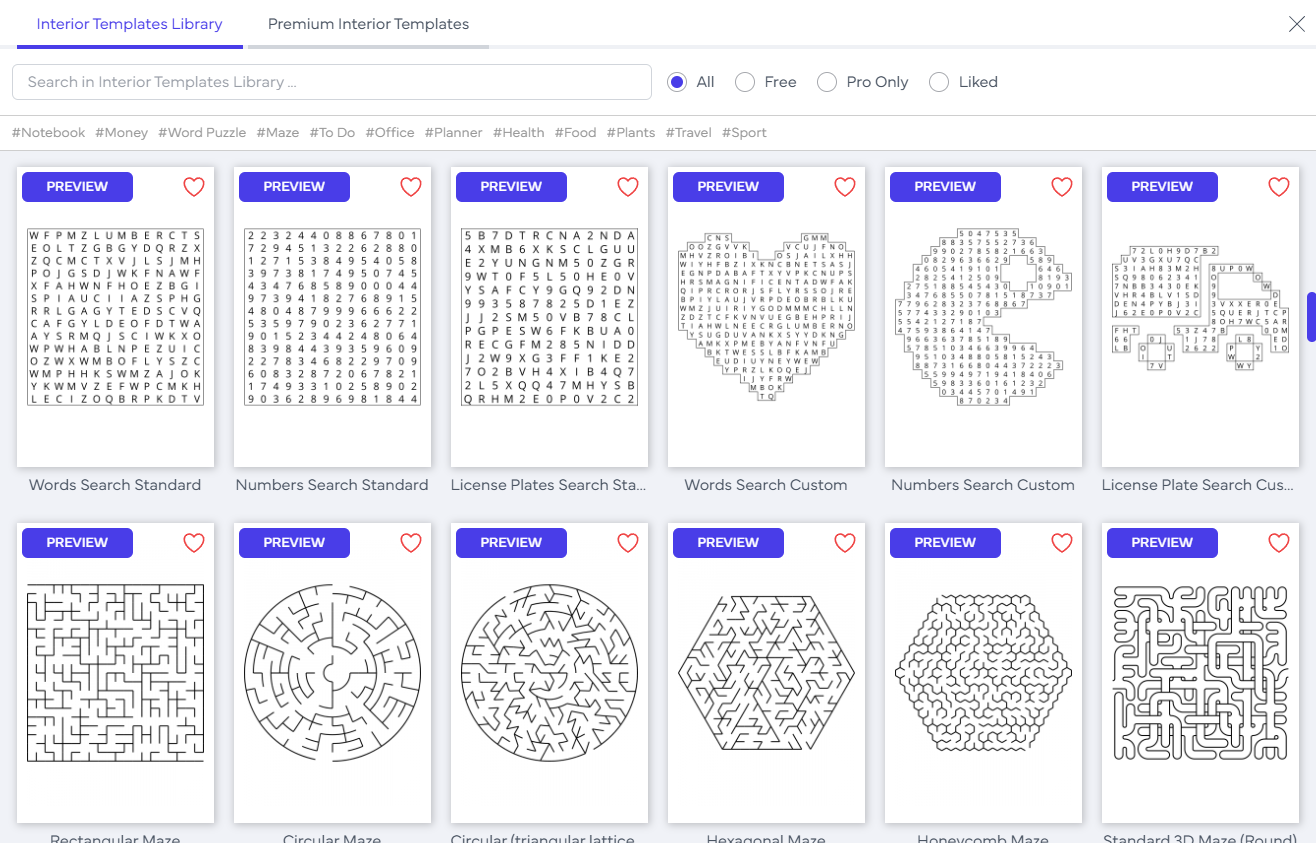
Instead of asking “What should I make?” you’re asking “How can I create the best possible product for this specific customer and search?” That’s a much better question.
Step 6: Turn One Idea Into a Product Family
Don’t think in terms of individual products. Think in terms of product families.
Suppose your research identifies an interesting opportunity around children’s travel activities. Instead of creating one product, you could develop a whole collection:
- Kids Road Trip Activity Pack
- Printable Kids Travel Mazes
- Travel Word Search for Kids
- Vacation Coloring Pages
- Kids Travel Games Printable
- Complete Kids Travel Activity Bundle
Book Bolt can help you develop the creative assets. Sale Samurai can help you research the different keyword opportunities around each one.
This approach also creates opportunities for bundles. A customer who might hesitate to purchase one small printable could see significantly more value in a larger collection.
Step 7: Build the Etsy Listing Around How Buyers Search
Creating an excellent product doesn’t guarantee anyone will find it. Your listing needs to communicate clearly with both the shopper and Etsy’s search system.
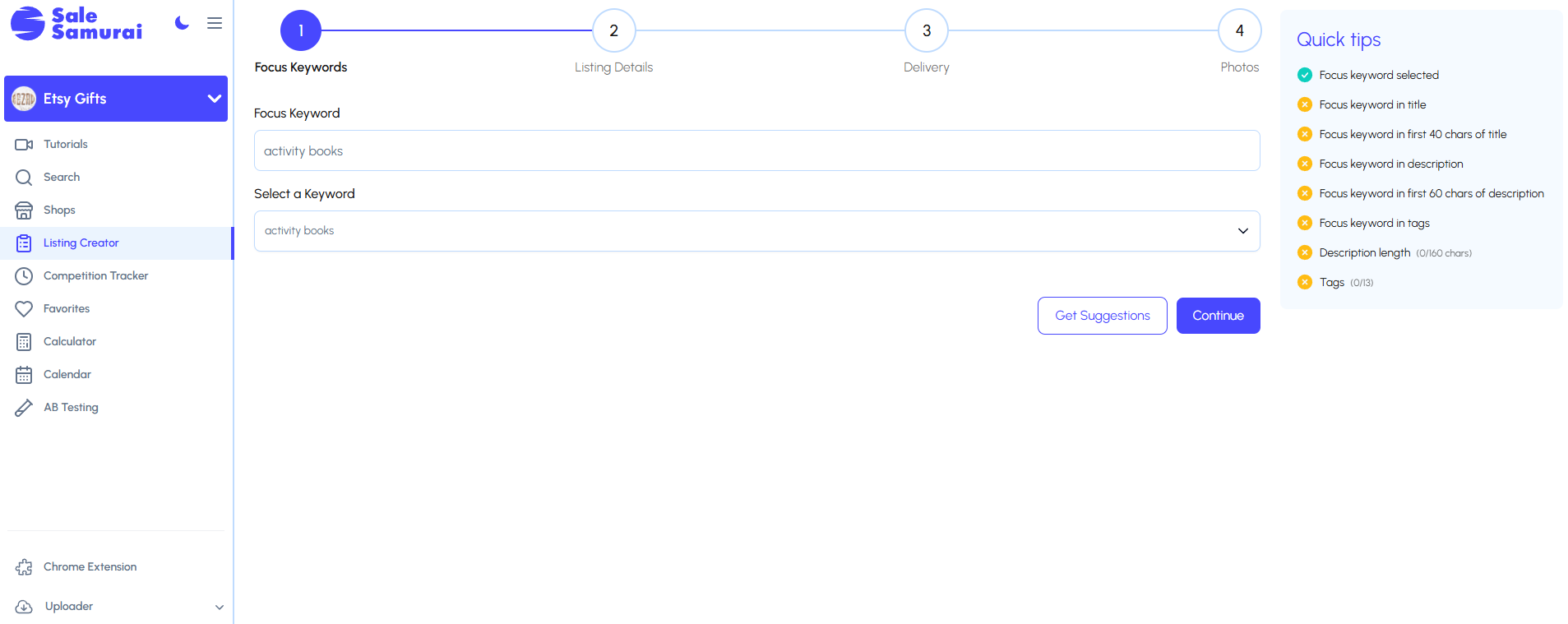
That means paying close attention to your title, tags, keywords, description, category, attributes, images, and pricing.
Sale Samurai’s Listing Creator is designed specifically around this part of the process. You can research your focus keyword and use that research when developing the listing, rather than guessing which phrases belong in your title and tags.
Step 8: Use All 13 Etsy Tags Strategically
Etsy allows sellers to use up to 13 tags. Don’t waste them. Each tag is another opportunity to describe your product in language relevant to potential customers.
Suppose your product is a printable reading tracker. Depending on your Sale Samurai research, relevant searches might revolve around concepts such as reading tracker, book tracker, reading log, printable reading log, book journal, reading planner, or book lover printable.
The exact terms you choose should come from your research. Don’t ask “What tags sound good?” Ask “What relevant phrases are Etsy shoppers actually using?” Sale Samurai helps you make that transition from intuition to data.
Stop guessing at your tags. The Sale Samurai Listing Creator builds your title and all 13 tags from real search data. Try it with code ETSY50 for 50% off month one.
Step 9: Don’t Forget the Product Images
Search gets the customer to your listing. Presentation gets them interested.
For digital products, shoppers need to immediately understand what they’re buying. Your images should answer:
- What is included?
- How many pages or files do I receive?
- What does the product look like?
- What size is it?
- Is it editable?
- Is this a physical product or a digital download?
- How would I use it?
A beautiful design hidden behind a confusing listing image can still struggle. Your first image especially needs to communicate the product quickly. Think of it as your storefront window.
Step 10: Price With the Market, Not Your Emotions
Creators sometimes price based on how long something took to create. Customers don’t know how long it took. They’re comparing the perceived value of your product with the alternatives.
This is another area where market research becomes useful. Look at comparable Etsy listings and investigate minimum, maximum, and average pricing, bundle pricing, the number of included files or pages, and the level of customization offered. Sale Samurai provides pricing information as part of its research functionality, helping sellers understand the competitive landscape.
You don’t need to be the cheapest. In fact, being the cheapest isn’t always desirable. The objective is to make your product’s value obvious relative to its price.
Step 11: Create Bundles to Increase Perceived Value
One of the easiest ways to expand your catalog is to bundle related products.
Imagine you’ve created a weekly planner, monthly planner, habit tracker, goal planner, meal planner, and budget planner. Each could exist individually, but you could also create an Ultimate Printable Life Planner Bundle. Now the same underlying assets support another product.
You can repeat this strategy across themes. A children’s activity creator could bundle coloring pages, mazes, word searches, tracing pages, and matching activities into a larger activity pack.
The point isn’t simply to make more listings. It’s to extract more value from the creative work you’re already doing.
Step 12: Build Around Seasons
Book Bolt users already understand the importance of seasonal niches, and the same principle applies on Etsy. Think about Valentine’s Day, Easter, Mother’s Day, Father’s Day, graduation, summer vacation, back to school, Halloween, Thanksgiving, Christmas, and New Year’s.
But don’t wait until the holiday arrives. Research ahead of time. Use Sale Samurai to investigate seasonal keywords and competition before the buying period begins, then use Book Bolt to create the relevant products. This gives your listings time to become established before demand peaks.
Step 13: Watch What Happens After Publishing
Publishing isn’t the end of the process. It’s the beginning of the data collection process.
Once your Etsy shop has products and traffic, start asking:
- Which listings receive views?
- Which listings get favorites?
- Which listings convert?
- Which keywords appear promising?
- Which themes repeatedly perform?
- Which products get ignored?
Sale Samurai’s Shop Analyzer is designed to help sellers see their shop performance, including metrics around listings, revenue, traffic, and best sellers.
Now you can make decisions based on your own store’s data, which is much more powerful than constantly chasing new ideas. If one concept works, expand it. If another doesn’t, investigate why before creating ten more versions.
The Bigger Strategy: Create Once, Think Bigger
The real opportunity here isn’t simply “sell your Book Bolt designs on Etsy.” The bigger idea is this:
Build a creative asset once, then think about all the legitimate ways that asset can become useful to different customers across different marketplaces.
A creator might start with Book Bolt → Amazon KDP and expand into Book Bolt → Digital Etsy Products, or potentially Book Bolt → Print-on-Demand Etsy Products, depending on the design and the seller’s business model.
Instead of having one marketplace determine the entire value of your creative work, you’re building a broader ecosystem around your designs.
The Repeatable Book Bolt + Sale Samurai Workflow
- Find an idea. Start with Book Bolt research, an existing product, a niche you’ve already worked in, or an idea you’d like to explore.
- Search it on Sale Samurai. Investigate the primary keyword and look at demand and competition.
- Expand the keyword. Look for related and long-tail searches. Don’t stop at the obvious term.
- Research Etsy competitors. Study successful products and shops. Look for patterns rather than products to copy.
- Choose the opportunity. Select a combination of product idea, audience, and keyword where you can create something competitive.
- Create with Book Bolt. Build the underlying designs, pages, activities, or creative assets.
- Package for Etsy. Turn those assets into a polished product appropriate for Etsy customers.
- Optimize with Sale Samurai. Research your title, tags, description, and positioning.
- Publish. Create the listing with clear images and an accurate description.
- Measure. Watch traffic, favorites, sales, and keyword performance.
- Improve. Adjust your positioning based on what the data tells you.
- Scale winners. Create complementary products, variations, and bundles around validated concepts, then repeat.
Don’t Just Create More. Create Smarter.
Creators have more tools available today than ever before, and that creates an interesting problem. It’s becoming incredibly easy to make things, which also means more competition. The advantage increasingly comes from knowing what to create.
That’s why Book Bolt and Sale Samurai complement each other so well. Book Bolt gives creators a powerful environment for turning ideas into products. Sale Samurai gives Etsy sellers the research and competitive intelligence needed to understand the marketplace those products are entering.
One handles the creation side. The other strengthens the market intelligence side. When you combine creation with data, you stop throwing products at a marketplace and hoping something works. You start building intentionally.
Already Have Hundreds of Book Bolt Designs? Start There.
If you’ve been using Book Bolt for a while, don’t assume you need hundreds of new ideas to get started on Etsy. Your first Etsy product might already be sitting somewhere inside your existing catalog.
Go through your previous projects and look at your interiors, activity pages, coloring concepts, planner layouts, trackers, journal concepts, puzzle themes, cover styles, and seasonal ideas. Then open Sale Samurai and start researching.
You might discover that an idea you originally developed for a physical book has an entirely different audience searching for a digital version, a printable variation, a bundle, or a related product. That’s the power of expanding into another marketplace.
Your back catalog is your starting inventory. Pick three past Book Bolt projects and run them through Sale Samurai this week. Get started with code ETSY50 for 50% off your first month.
Research Before You Build
If you remember only one lesson from this article, make it this:
Don’t create 100 Etsy products and then ask why they aren’t selling.
Before spending hours creating a product, investigate:
- Is there demand?
- What terminology do customers use?
- How competitive is the niche?
- What are successful sellers offering?
- What price range does the market support?
- Can I create something genuinely useful or differentiated?
Sale Samurai exists to help answer those questions. And once you’ve identified the opportunity, you already have Book Bolt waiting to help you turn the idea into reality.
Your Next Marketplace Could Be One Search Away
If you’re already a Book Bolt creator, you’ve done the difficult part. You’ve learned how to turn an idea into a product. Now it’s time to think bigger about where those ideas can go.
Amazon KDP can remain an important part of your publishing business. But your creativity doesn’t have to stop at Amazon. Etsy can give you another marketplace, another customer base, and another reason to get more value from the designs and skills you’ve already developed.
The process is straightforward:
Research with Sale Samurai → Create with Book Bolt → Optimize for Etsy → Publish → Measure → Scale what works.
Instead of guessing what Etsy shoppers might want, use data to discover what they’re already searching for.
Ready to Explore Etsy? Here’s 50% Off.
Sale Samurai helps you discover Etsy keywords, analyze competition, research successful listings, optimize your titles and tags, and find opportunities for turning your Book Bolt creativity into products Etsy shoppers are actively searching for.
Your next product idea may already exist. You just need to find the market for it.